


Must Reads - Unicorns Unite

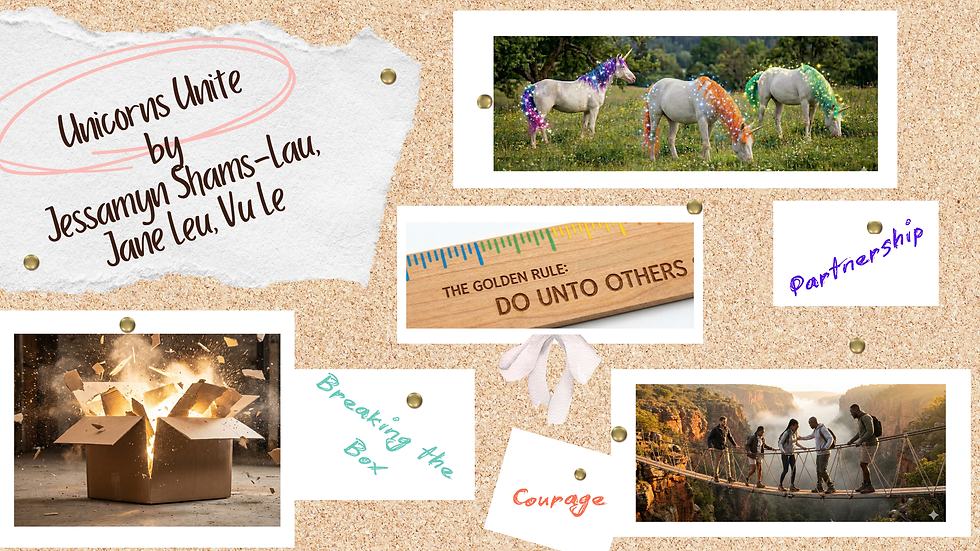
Unicorns Unite
by Jassamyn Shams-Lau, Jane Leu, Vu Le
"Take risks. Faster.” –p. 43

First, Know This
Title: Unicorns Unite: How Nonprofits & Foundations Can Build EPIC Partnerships
Author: Jessamyn Shams-Lau, Jane Leu, Vu Le
Topics: Strategy, Leadership, Social Impact
The Bottom Line: This book provides a sharp diagnosis of the dysfunctions within the nonprofit sector and offers a practical framework to overcome them through “EPIC” (Equitable, Powerful, Integrated, and Collaborative) partnerships between nonprofits and foundations.
“Money, trust, and standards are at the root of our dysfunction, and perpetuate practices and policies that reek of inequality, create artificial divisions between nonprofits and foundations, and limit the quality of our partnerships to ‘just okay’.” -p. 72
What You Should Know
The Big Idea
Overcoming nonprofit sector dysfunction is as much about courage as it is about the “Golden Rule.” The strength of our sector depends on radical partnership: between nonprofits and foundations and peer-to-peer among organizations and funders themselves. The opportunity to build healthy relationships that unite the sector and amplify its power to do good in healthy ways is immense and, thankfully, very doable.
Key Takeaways
Innovate and Adapt: Be willing to take risks, accept failure, and try new things—and do it faster. This is about the exploratory nature of adaptation and the willingness to trust yourself and your partners.
Embrace the "Unicorn": The authors remind us that nonprofit participants are "unicorns" who don't need to conform to corporate business models or business as usual. It takes bravery to approach partnerships as shared tools for a shared dream.
Value All Inputs Equally: To build EPIC partnerships, we must ensure that no single input—whether money, time, or standards—takes precedence over the others. This addresses the root causes of strained partnerships by valuing social change inputs like expertise, creativity, and community contacts as equal to financial capital.
The Consultant's Cut
What’s In It For You (WIIFY)
This is a handbook for exploration and experimentation. If you’re navigating a sector "nightmare," there is a tip, tool, or practice here to help. It is a resource for courageous decision-making and radical honesty about the challenges we face. While the dream of "EPIC" partnerships is ambitious, the authors provide super-practical steps for navigating funding and community needs, helping you build partnerships that actually accomplish the "stuff no one wants to do."
Why It Gets My Nod
While the book focused largely on nonprofits and foundations, let’s be real, many nonprofits work with government entities in very similar ways as a grantor or funder. This is extremely relevant in those partnerships too.
Overall, this challenges the sector to think honestly, practically, and attuned to their capacity. From nonprofits requesting what will address their actual needs and help them to be a better colleague and partner to funders using contingency funds that anticipate what could go wrong and having a plan for it in advance to avoid assumptions of distrust and the scramble for solutions. I’m totally behind this in principle and in practice.
This book is a reminder that sometimes innovation is about returning to the basics. Case in point the golden rule: literally the call to consider capacity and what works for you and your partner in the work. This is true collaboration and realistic partnership. Most of the insights and tips stand on this “simple rule of thumb guide for behavior: Ask yourself what you want people to do for you, then grab the initiative and do it for them.“ Matthew 7:12, The Message Bible. Definitely sage advice and ideal to build partnerships intended to save (your part of) the world.
From Page to Practice
This book offered so many practical methods to reverse and reverse engineer sector problems in ways that account for the unique nature of the entity affected. Here are some things I’m looking forward to trying out in my work with funders and nonprofits:
Reduce reporting time: Work to align reports to actual nonprofit goals and existing or useful internal documents. This could be ideal to build capacity and assist nonprofits to tell their story clearly, consistently to the board, donors, and other funders. This encourages good behavior and is replicable across program and organization types.
Think better together: Champion results and work of peers and consider what building nonprofit peer groups could look like to help each other support, team up, and drive resources to their group partners.
Game of Cake: This was my absolute favorite part of this book. This game was mind boggling in its relatability. The challenge to work through what every nonprofit leader grapples with constantly to align resources to actual organizational and community need was intense, ridiculous, and ultimately very gratifying to see played out in such relatable terms. I want to use some of this to help demonstrate the complexity and unnecessary restrictions preventing mission accomplishment where general operating funds could relieve and resolve funding gaps and ensure the work gets done.
A poignant definition of power and privilege: “The best definition of privilege I’ve heard is anything you don’t have to wrestle with, that you don’t have to think about.” p.102. Such an easy way to see how privilege shows up in our own lives. This also connects seamlessly to empathy and truly understanding what it takes to do someone else’s job, walk in their shoes, get the answer, give the funds, determine the method help will be provided, etc. I’ve been thinking about this a lot and am challenging myself to pause and think critically about my approach and advice when I come face to face with it.
Bring This Strategy to Your Team
These principles are at the heart of my work in values-based organizational development. If you're a leader ready to move into more powerful and honest partnerships, let's talk about how Excelevate can help.
“We need to stop treating nonprofits the way society treats poor people.” -p. 46
Have you read this book?
Yes
No
It's on my list
Want to Know More?
Stay Tuned
Check out what’s next on my list of things to know.
This post is part of my series of book recommendations. I only review books I recommend, so you can feel confident learning from trusted leaders in the field. I'm an affiliate of Bookshop.org, and I'll earn a commission if you click through and make a purchase, which also helps support local bookstores!


